Museums & Culture
Anchorage's many museums and historical attractions showcase Alaska’s complex Native, Russian, gold rush and settler history from every imaginable angle.


Gain an understanding of Alaska Native lifestyles, beliefs and traditions, and their role in contemporary Alaska. Anchorage is an excellent place to start learning more about Alaska's diverse Indigenous cultures.
Five distinct geographic regions of Alaska shaped traditional life, and more than 20 languages hold the stories and songs of Alaska Native people. Nor are they consigned to the past; Alaska Native cultures are alive and dynamic.
Anchorage is located within the traditional homelands of the Dena’ina Athabascan people and the Native Village of Eklutna. Dena'ina people lived here long before Europeans arrived, fishing, hunting, and living throughout the region. Today, Anchorage is home to Dena'ina as well as other Alaska Native people from tribes and cultures around the state, from coastal southeast communities to the far north and all points in between. It’s one element helping make Anchorage Alaska’s most diverse city – and one of the most diverse cities in the country.
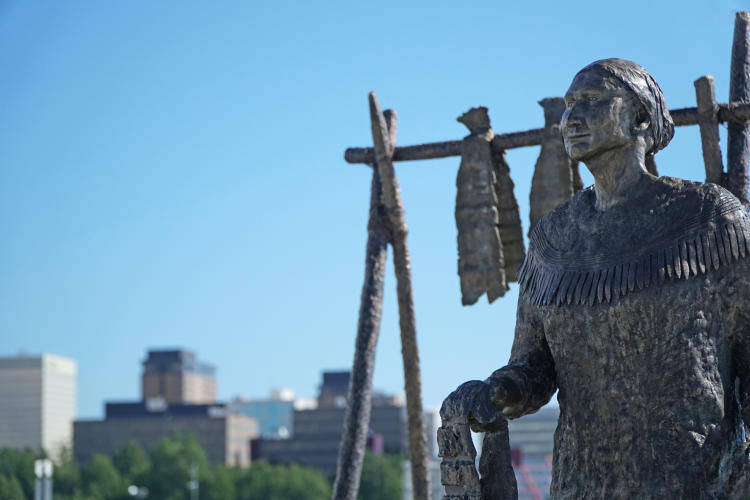
Below: A statue of Dena'ina matriarch "Grandma" Olga Ezi, part of a cultural installation at the Ship Creek small boat launch near Downtown Anchorage. The bronze likeness is the work of Dena'ina Athabascan artist Joel Isaak.
Anchorage is a hub for business and travel, attracting people from across Alaska, so traditions from all over the state are gathered together in a single place. This is most evident at the Alaska Native Heritage Center. Song, dance, and sport performances from each culture provide an excellent introduction to cultures separated by hundreds or even thousands of miles. Hands-on art and practical craft demonstrations take place near a wooded outdoor village site with life-sized examples of traditional buildings. You might learn a technique from a master carver in residence for the summer, overhear what an Alaska Native teen’s grandmother used in traditional remedies, or hear a story from last fall’s hunt.
Rare and unique items from all over Alaska come home in the Smithsonian Arctic Studies Center at the Anchorage Museum. The gallery brings more than 600 rare or significant Alaska Native artifacts from the national museum back to Alaska.
Eklutna Historical Park provides further immersive opportunities to learn about Alaska Native culture.
Alaska Native artists and artisans display their works at exhibitions, galleries and shops in Anchorage. You’ll find traditional masks, carvings in wood, bone and antler, and gallery-worthy hide and fiber works, but also contemporary interpretations inspired by modern Alaska Native life. Look for murals and other public art by Indigenous artists. Alaska Native art runs the gamut.
The NYO Games, a competition in which Alaska schoolchildren compete in traditional Native games, takes place each spring in Anchorage. The state’s largest gathering of Indigenous peoples regularly takes place in Anchorage with the Alaska Federation of Natives convention. The Charlotte Jensen Arts Market at Fur Rondy is a big draw during Alaska’s oldest winter festival.
Anchorage's many museums and historical attractions showcase Alaska’s complex Native, Russian, gold rush and settler history from every imaginable angle.
Anchorage is located within Dena’ina Ełnena, the traditional homelands of the Dena’ina Athabascan people. One of Alaska’s many distinct and diverse Indigenous groups, the Native...